
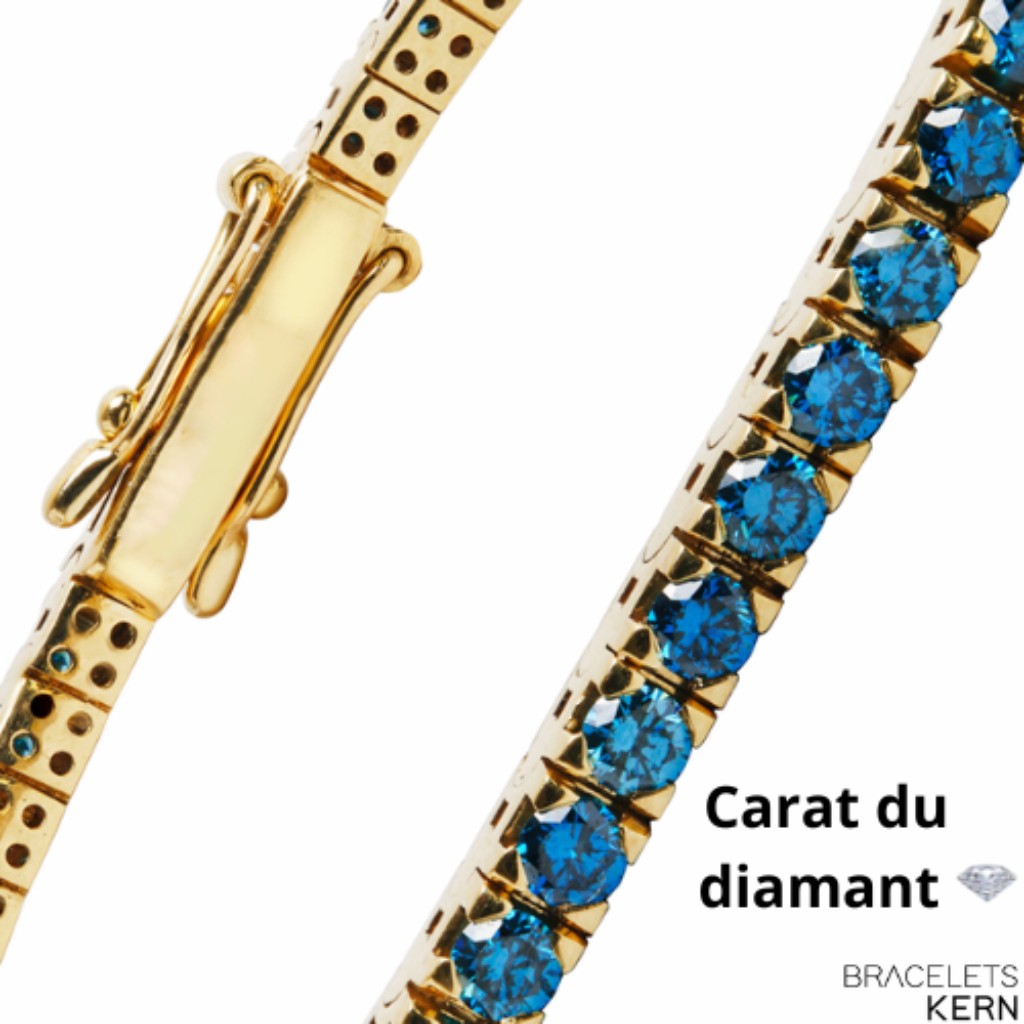
Carat is one of the four essential criteria for evaluating a diamond, known as the 4Cs (Carat, Cut, Colour, Clarity). While many people associate carat with a diamond’s size or value, its true meaning is more nuanced. Carat does not reflect the beauty or brilliance of a diamond—it refers solely to its weight. Yet, this single factor plays a major role in determining price. Whether you’re considering a 1-carat diamond bracelet or a more delicate piece, here’s everything you need to know about carat, its origins, and its importance in jewelry.
What Is a Diamond Carat?
The carat (symbol: ct) is the standard unit of measurement used to determine a diamond’s weight. One carat is equivalent to 0.20 grams. This measurement system dates back to antiquity, when carob tree seeds were used as a natural reference for weighing gemstones due to their consistent weight. The word “carat” actually comes from the Greek term keration, meaning “little horn,” in reference to the carob seed.
It’s crucial not to confuse a diamond’s carat with gold carats (e.g., “9 carat gold” or “18 carat gold”). In the case of gold, carat indicates purity, not weight. For instance, a 9K gold bracelet contains 37.5% pure gold.
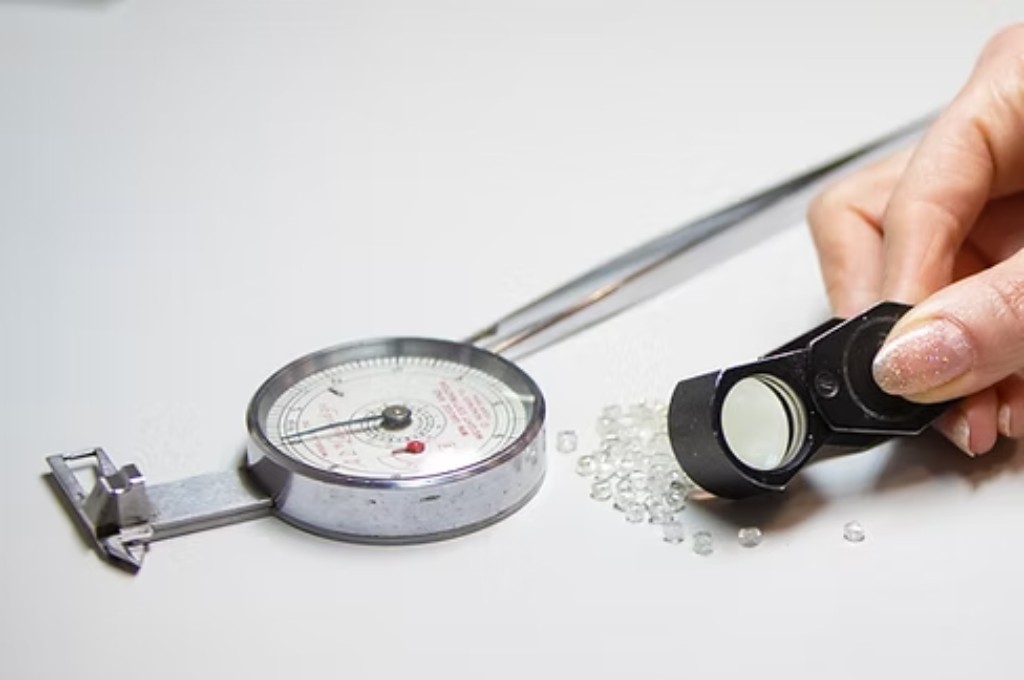
In the diamond world, carat refers strictly to the weight of the stone—not its visible size. Two diamonds weighing exactly 1 carat may appear different in size depending on their cut depth, shape, or proportions. This is why carat should always be considered alongside other key criteria, especially the cut.
How Does Weight Influence the Apparent Size of a Diamond?
Many people assume that a higher carat weight automatically means a visibly larger diamond. However, that’s not always the case. The diamond carat strictly measures weight, not visual size. Two diamonds weighing 1 carat can look very different depending on their shape (round, oval, pear…) and cut quality.
Correlation Between Weight and Apparent Size by Shape
For instance, a round brilliant cut diamond of 1 carat typically measures around 6.4 to 6.5 mm in diameter. In contrast, an oval or marquise cut diamond of the same weight will appear larger, as it has a more elongated surface area.
Weight-to-Size Reference Table (Round Cut):
Carat Weight | Average Diameter (mm) – Round Cut |
0.25 ct | approx. 4.1 mm |
0.50 ct | approx. 5.1 mm |
0.75 ct | approx. 5.8 mm |
1.00 | approx. 6.4 mm |
1.50 | approx. 7.4 mm |
These measurements can vary depending on the diamond’s cut, which affects depth, table width, and therefore its brilliance and perceived size.
The Role of Cut Depth
A diamond that is too deep will have a smaller visible diameter despite its weight, while a shallow-cut diamond may appear larger but lack brilliance. That’s why cut is a key factor—it optimizes weight distribution to maximize both sparkle and visual size. We’ll explore this in greater detail in our upcoming article dedicated to diamond cut.
Carat and Diamond Price: How It Affects Your Jewelry Budget
Carat weight is a major factor in the price of a diamond, but the impact is not linear. The price per carat increases exponentially with weight, as larger diamonds are significantly rarer.
Example: 0.90 ct vs 1.00 ct
A 0.90 carat diamond can be 20–30% cheaper than a 1.00 carat diamond, despite the minimal weight difference. This is due to the psychological threshold of 1 carat, which is highly desirable among buyers.
For example:
- 0.90 ct diamond = approx. €4,000
- 1.00 ct diamond (same quality) = approx. €5,500–€6,000
These prices vary depending on the other 4Cs: clarity, color, and cut. A well-cut diamond with better color and clarity can cost significantly more—even at a lower carat.
The Importance of a Balanced Choice
A 0.70 ct diamond with excellent cut, VS1 clarity, and G color can offer a better visual effect than a poorly cut or lower-quality 1 carat diamond. Therefore, don’t focus solely on carat weight—consider the full 4C spectrum to balance quality, aesthetics, and budget.
How to Verify a Diamond’s Carat?
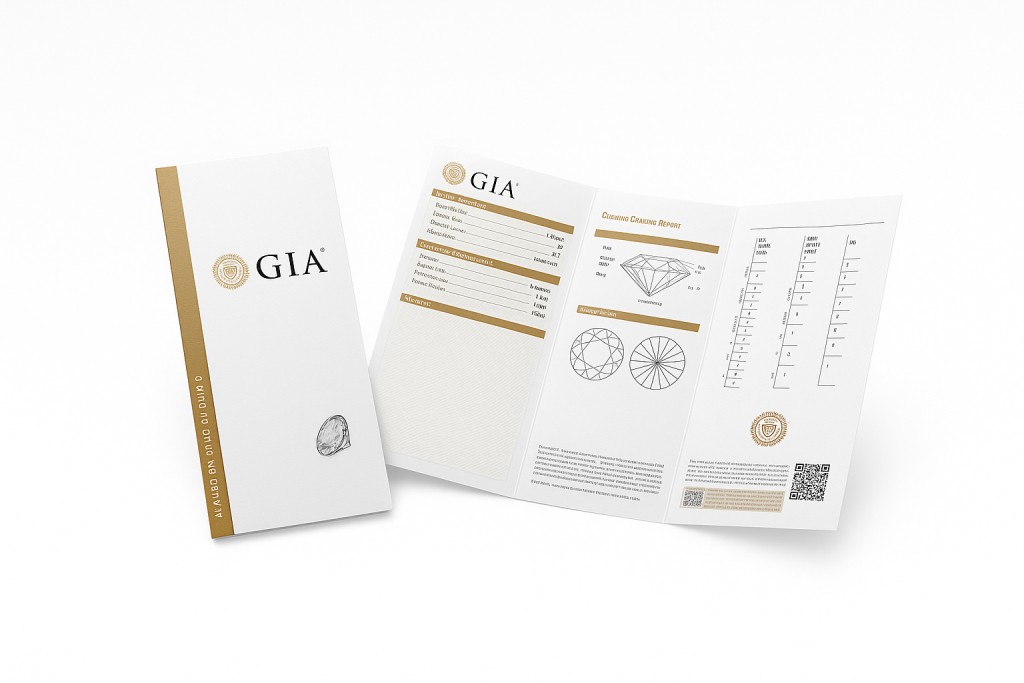
When purchasing a piece of jewelry—especially a diamond bracelet—it’s essential to verify the actual carat weight. Here are the most reliable ways to check this key criterion:
1. Check a Gemological Certificate
Diamonds certified by renowned laboratories such as GIA, IGI, or HRD always include the precise carat weight, often down to two decimal places (e.g., 0.71 ct). The official certificate remains the most trustworthy and essential proof when buying a valuable diamond.
2. Have the Diamond Measured by a Professional
A jeweler or gemologist can use a digital caliper to measure the stone’s dimensions (diameter, height, depth) and estimate its weight—particularly useful if the diamond does not come with a certificate.
3. Beware of Rounded Marketing Claims
It’s common for some sellers to advertise a “1 carat diamond” when the actual weight is only 0.90 ct. This creates an illusion of higher value, but you’re paying for a full carat without truly receiving it. Always ask for the exact carat weight, ideally supported by a written document.
Which Carat to Choose for a 9K Gold Diamond Bracelet?
Your ideal carat choice depends on both your personal preferences and budget. Here are some helpful benchmarks to choose the right diamond size without compromising on quality:
Strategic Carat Milestones:
- 0.30 ct – Discreet yet elegant, ideal for minimalist or fine bracelet designs.
- 0.50 ct – A great balance between visibility and price.
- 0.70 ct – Visually close to 1 carat, but significantly more affordable.
- 1.00 ct – A classic choice for a central-stone bracelet, with strong visual impact.
- 1.50 ct and above – For a bold and spectacular look, with a higher budget.
Pro Tip: Aim Just Below Key Thresholds
A 0.90 ct diamond is often much less expensive than a full 1 carat, while still offering a nearly identical visual effect—especially when set in a well-designed mount. This smart choice allows you to invest more in clarity or color, and strike the perfect balance.
Consider the Use: Bracelet Style
A diamond bracelet, for example, often highlights carat weight distributed across multiple stones, while a central-stone design focuses on the visual impact of a single, larger diamond. Your choice should therefore be adapted to the bracelet’s design and the visual effect you’re aiming for.
Carat and Diamond Bracelets: Why It Matters
When it comes to diamond bracelets, the concept of carat takes on a slightly different meaning depending on the design. In a bracelet, it’s not just about a central stone—but often about the total carat weight, distributed across multiple diamonds.
Total Carat Weight vs. Individual Carat
A tennis bracelet or pavé diamond bracelet may display a total carat weight of 1.00 ct, but this may be composed of dozens of small diamonds. In such cases, each stone typically weighs between 0.01 and 0.05 ct. The result is often a more sparkling effect, with light evenly reflected across the entire piece.

Tip: Read the Product Description Carefully
It’s essential to distinguish the following in the product description:
- Total carat weight (ctw)
- Number of stones
- Carat distribution across the bracelet
For example, a 1.00 ct diamond bracelet in 9K gold may be composed of 25 diamonds, each weighing 0.04 ct. This arrangement provides a harmonious visual effect, delivering consistent brilliance around the wrist.
Thanks to this even setting, the total carat weight is optimized to offer volume, sparkle, and flexibility, while maintaining a perfect balance between elegance and comfort.
💡 Pro Tip: The more stones you have—and the better calibrated they are—the more fluidly the bracelet will reflect light. This is one of the secrets behind a refined tennis bracelet.
It’s Not Just About Carat: Other Key Factors to Consider
Carat weight is undoubtedly a major factor, but it should never be assessed in isolation. To choose a well-balanced, high-quality diamond, it’s essential to consider the other 3 Cs from the 4Cs of diamond quality:
Cut
A superb cut enhances brilliance and brings the diamond to life—even if the carat weight is modest. A well-cut diamond often appears larger and more radiant.
Color
Diamonds are graded from D (colorless) to Z (noticeable yellow or brown tint). A G or H grade often offers an ideal balance between visual purity and price.
Clarity
This refers to internal inclusions or surface blemishes. A VS1 or SI1 clarity diamond has few to no visible inclusions, offering excellent value for money.
Want to Learn More?
For a deeper dive into these essential criteria, read our article: The 4 Cs of Diamonds: Understanding Diamond Quality
FAQ – How to Choose the Right Carat for a Diamond Bracelet
What does carat mean for a diamond?
Carat is the unit of measurement used to define a diamond’s weight. One carat equals 0.20 grams. It does not measure the visible size or quality—only the stone’s weight.
How many diamonds are in a 1-carat bracelet?
It depends on the design. A pavé or tennis bracelet with a total of 1 carat can include around 25 to 50 small diamonds, each weighing between 0.02 and 0.04 carats.
Is a 1-carat diamond visibly bigger than a 0.90-carat diamond?
Not always to the naked eye. A 0.90 ct diamond can appear just as large as a 1 ct stone, especially if it’s well cut. However, the price difference can range from 20% to 30% due to the symbolic value of reaching 1 carat.
Which carat should I choose for a women’s diamond bracelet?
It depends on the look you’re going for:
- 0.30 to 0.50 ct – For a discreet and refined design
- 0.70 to 1.00 ct – For a bolder visual impact
- 1.00 ct and above – For a prestigious and radiant bracelet
Does carat affect the price of a diamond bracelet?
Yes. The price increases exponentially with the carat weight. The larger the diamond, the rarer it is—making it more expensive per carat.
What’s the difference between diamond carat and gold carat?
- Diamond carat refers to weight
- Gold carat refers to purity
At Bracelets Kern, our bracelets are crafted in 9K gold, which means 37.5% pure gold.
Conclusion: Understanding Carat Helps You Choose Wisely
A diamond’s carat is more than just a number—it’s a weight unit that directly impacts the value, apparent size, and price of a piece. But as we’ve seen, carat should never be considered in isolation. A diamond’s brilliance also depends on its cut, clarity, and color—factors just as important as carat.
Whether you prefer a 1-carat stone or a more delicate composition of multiple smaller diamonds, the key is to find the right balance between aesthetics, quality, and budget. With this knowledge, you can now make a more informed choice when selecting a 9K gold diamond bracelet, tailored to your style, budget, and desired look.
Explore Our 9K Gold Diamond Bracelets Available in yellow gold, white gold, and rose gold, for both women and men. Fast delivery – Certified quality


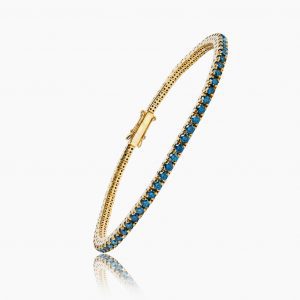
Synthetic Blue Sapphire Bracelet – 925 Yellow Rhodium-Plated Silver
925 silver bracelet with yellow rhodium plating, set with synthetic blue sapphires, and featuring a double safety clasp for enhanced security.
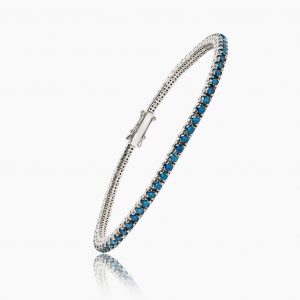
SKU: BRAC-BLEUR-SB-OJ-1 Categories: All articles, Blue Royal Collection, HER, HIM149€Synthetic Blue Sapphire Bracelet – White Rhodium-Plated 925 Sterling Silver
Bracelet in white rhodium-plated 925 sterling silver, set with synthetic blue sapphires, and featuring a tongue clasp with double safety.
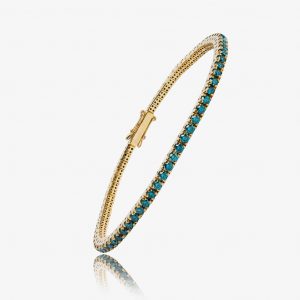
SKU: BRAC-BLEUR-SB-OB-1 Categories: All articles, Blue Royal Collection, HER, HIM149€Blue Diamond Crystal Bracelet – 925 Yellow Rhodium-Plated Silver
925 silver bracelet with yellow rhodium plating, set with blue diamond crystals, and featuring a double safety clasp for enhanced security.
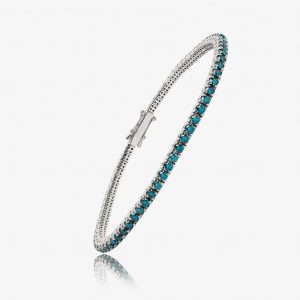
SKU: BRAC-EAU T-DBL-OJ-1 Categories: All articles, HER, HIM, Turquoise Water Collection149€Blue Diamond Crystal Bracelet – 925 White Rhodium-Plated Silver
925 silver bracelet with white rhodium plating, set with blue diamond crystals, and featuring a double safety clasp for enhanced security.
SKU: BRAC-EAU T-DBL-OB-1 Categories: All articles, HER, HIM, Turquoise Water Collection149€