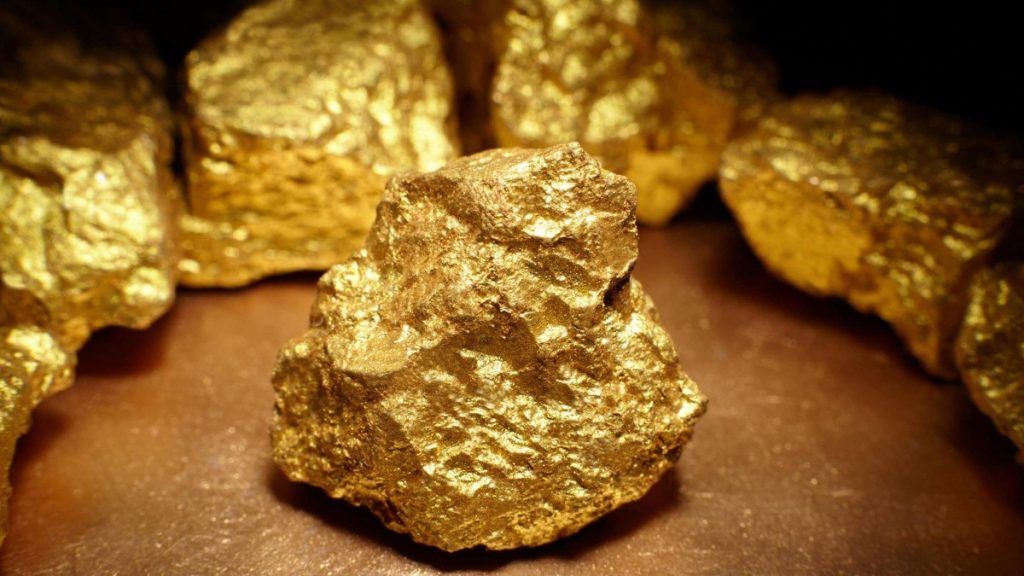
If we trace the origins of gold, we must look far beyond our planet. According to scientists, gold is the result of exceptional cosmic events, including the collision and explosion of stars billions of years ago. These phenomena projected gold particles into space, which eventually became part of the Earth’s crust. This rarity is what makes gold such a precious and sought-after metal for millennia.
Gold Through History: Its Role in Jewelry and Investment
Since ancient times, gold has been a coveted metal in many civilizations. The Egyptians used it to craft refined jewelry and funerary objects, the Romans minted their own gold coins, and in the Middle Ages, it symbolized power and royalty. Even today, gold remains prominent in high jewelry, investment, and even technology.
Pure Gold or Alloy?
Gold extracted from the earth is naturally yellow and pure (24 karats). However, pure gold is very malleable, making it difficult to work with in jewelry. To enhance its strength and achieve various color shades, it is alloyed with other metals such as silver, copper, palladium, or nickel. This process creates different types of gold with distinct hues.
The Different Colors of Gold
In jewelry, gold primarily comes in four shades: yellow gold, white gold, gray gold, and rose gold. Each of these colors is achieved through a specific blend of metals.
Yellow Gold: Why Is It the Most Common in Jewelry?
Composition :
- 75% pure gold
- 12.5% silver
- 12.5% copper
Yellow gold is the most traditional and prized shade since antiquity. Its warm color and timeless appeal make it an ideal choice for lovers of classic jewelry.
Advantages:
- Highly resistant to oxidation and tarnishing
- Easy to maintain
- Ideal for a timeless look
White Gold: Composition, Advantages, and Maintenance
Composition :
- 75% pure gold
- 25% palladium or nickel (formerly)
- Coated with a thin layer of rhodium
White gold is often chosen for its modernity and refinement. Its bright color enhances precious stones like diamonds.
Advantages:
- Elegant and contemporary look
- Ideal for wedding jewelry
- Pairs well with precious stones
Maintenance: The rhodium coating on white gold fades over time. It is recommended to have it re-applied regularly to maintain its shine.
Gray Gold: A Balance Between White and Yellow Gold?
Composition :
- 75% pure gold
- 15% to 25% silver and/or palladium
Often mistaken for white gold, gray gold has a softer and less shiny hue. It does not necessarily require rhodium plating, which simplifies its maintenance.
Advantages:
- Requires less maintenance than white gold
- Subtle and refined appearance
- Scratch-resistant
Rose Gold: A Timeless Trend in Jewelry
Composition :
- 75% pure gold
- 20% copper
- 5% silver
Rose gold is particularly appreciated for its warm and romantic appearance. Its soft and subtle tone complements all skin tones.
Advantages:
- Trendy and unique
- Excellent durability thanks to copper
- Ideal for modern and refined jewelry
Comparison of Gold Types: Which One to Choose?
Gold Type | Composition | Color | Durability | Maintenance |
Yellow Gold | 75% gold, 12.5% silver, 12.5% copper | Warm gold | Highly durable | Easy |
White Gold | 75% gold, 25% palladium or nickel + rhodium | Bright white | Scratch-prone | Regular rhodium plating |
Gray Gold | 75% gold, 15-25% silver and palladium | Matte gray-white | Highly durable | Low maintenance |
Rose Gold | 75% gold, 20% copper, 5% silver | Warm pink | Highly durable | Easy |
Other Gold Colors: Green, Blue, and Purple Gold
Although less common, other alloys can create even more unique shades:
- Green Gold: A mix of gold and silver
- Blue Gold: Created by adding iron or aluminum
- Purple Gold: Obtained with aluminum
These variations are often more fragile and are mainly used in artistic jewelry.
Which Gold Color Has the Most Value?
Contrary to popular belief, the value of a gold piece does not depend on its color but on its pure gold content. The higher the gold purity, the more valuable the jewelry.
Example:
- 24K Gold: 99.9% pure gold
- 18K Gold: 75% pure gold
- 9K Gold: 37.5% pure gold (ideal for affordable and durable jewelry)
-
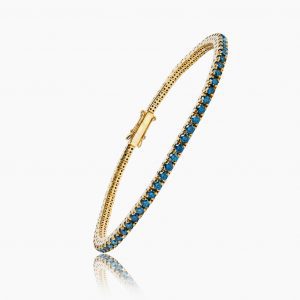
Synthetic Blue Sapphire Bracelet – 925 Yellow Rhodium-Plated Silver
925 silver bracelet with yellow rhodium plating, set with synthetic blue sapphires, and featuring a double safety clasp for enhanced security.
SKU: BRAC-BLEUR-SB-OJ-1 Categories: All articles, Blue Royal Collection, HER, HIM149€ -
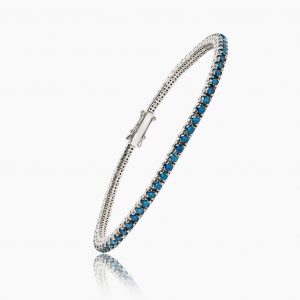
Synthetic Blue Sapphire Bracelet – White Rhodium-Plated 925 Sterling Silver
Bracelet in white rhodium-plated 925 sterling silver, set with synthetic blue sapphires, and featuring a tongue clasp with double safety.
SKU: BRAC-BLEUR-SB-OB-1 Categories: All articles, Blue Royal Collection, HER, HIM149€ -
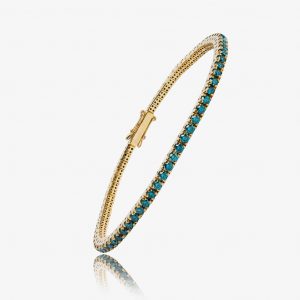
Blue Diamond Crystal Bracelet – 925 Yellow Rhodium-Plated Silver
925 silver bracelet with yellow rhodium plating, set with blue diamond crystals, and featuring a double safety clasp for enhanced security.
SKU: BRAC-EAU T-DBL-OJ-1 Categories: All articles, HER, HIM, Turquoise Water Collection149€ -
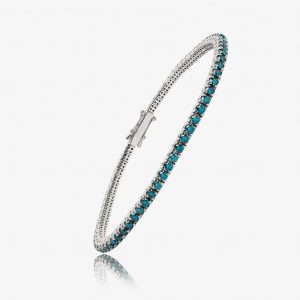
Blue Diamond Crystal Bracelet – 925 White Rhodium-Plated Silver
925 silver bracelet with white rhodium plating, set with blue diamond crystals, and featuring a double safety clasp for enhanced security.
SKU: BRAC-EAU T-DBL-OB-1 Categories: All articles, HER, HIM, Turquoise Water Collection149€
How to Maintain Your Gold Jewelry?
- Yellow Gold: Easily cleaned with soapy water and a soft cloth.
- White Gold: Requires rhodium plating every 2 to 5 years to maintain its shine.
- Rose Gold: Similar maintenance to yellow gold, but may develop a slight patina over time due to its copper content.
- Gray Gold: Scratch-resistant and does not require special treatment.
Which Gold Should You Choose for Your Jewelry?
Choosing a gold shade is primarily a matter of personal taste. However, here are some tips:
- For a timeless and classic style: Opt for yellow gold.
- For a modern and elegant look: White or gray gold is ideal.
- For a soft and romantic touch: Choose rose gold.
FAQ: Everything You Need to Know About Gold and Its Different Colors
- Are white gold and gray gold the same?
No, white gold is usually coated with rhodium for a bright shine, while gray gold has a more natural and satin-like hue without needing rhodium plating. - Is rose gold more fragile than yellow gold?
No, rose gold is actually more durable than yellow gold due to its higher copper content, which makes it stronger. However, it may develop a slight patina over time. - Which type of gold is the most hypoallergenic?
White gold without nickel (alloyed with palladium) is best for sensitive skin. 18K gold is also a good option as it contains a higher amount of pure gold, reducing allergy risks. - Does white gold lose its color over time?
Yes, white gold can lose its shine because the rhodium plating wears off over time. It is recommended to have it re-plated every 2 to 5 years to maintain its brilliance. - What is the best type of gold for everyday jewelry?
9K or 18K gold (yellow, white, gray, or rose) is recommended for daily wear, as it is more durable than 24K gold, which is too soft for frequent use.
Conclusion
Each type of gold has its unique characteristics. Whether you prefer classic yellow gold, elegant white gold, romantic rose gold, or subtle gray gold, you’ll find the perfect bracelet at Bracelets-Kern. Explore our collection and discover the ideal jewelry to enhance your style!