Tableau des poinçons et pureté de l’or - Bracelets Kern

How to Recognize Hallmarks on Your Gold Jewelry?

Tableau des poinçons et pureté de l’or - Bracelets Kern

Gold jewelry hallmarks are essential markings that certify their purity and origin. They guarantee the authenticity of the precious metal and are often required for jewelry certification. In this article, we explain how to decipher these hallmarks and determine the value of your gold bracelets, rings, and necklaces.

What Is a Hallmark?

A hallmark is a marking stamped on a gold piece by an official authority or a manufacturer. It helps to identify:

  • The gold content of the jewelry (9K, 18K, 24K, etc.).
  • The origin and authenticity of the jewelry.
  • The manufacturer or goldsmith who designed it.

What Is a Carat?

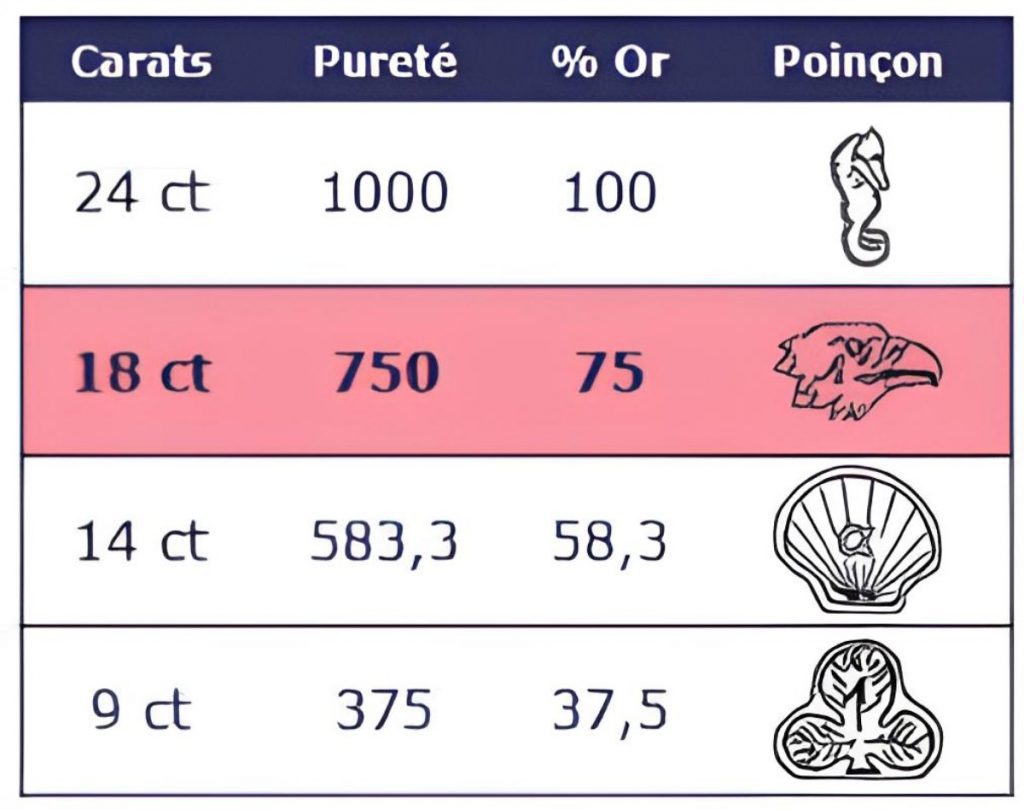
The carat is the unit of measurement for gold purity. The higher the carat number, the greater the proportion of pure gold:

  • 24K (999/1000): Pure gold.
  • 18K (750/1000): Alloy containing 75% gold.
  • 14K (585/1000): Alloy with 58.5% gold.
  • 9K (375/1000): Alloy containing 37.5% gold.

Different Types of Gold Jewelry Hallmarks

1. Guarantee Hallmarks and Their Meaning

Guarantee hallmarks are stamped by the customs administration to certify the gold content. In France, the most common ones are:

  • Eagle’s head: 18K gold (750/1000).
  • Scallop shell: 14K gold (585/1000).
  • Clover: 9K gold (375/1000).
  • Horse’s head: 24K gold (999/1000).

2. Manufacturer’s Hallmarks (Master Hallmarks)

Every jeweler or goldsmith must mark their jewelry with a hallmark in the shape of a diamond containing their initials or a distinctive symbol. This hallmark helps trace the origin of the jewelry and identify its creator.

3. Foreign Precious Metal Hallmarks

If you own gold jewelry from another country, the hallmarks may differ:

  • United Kingdom: Crown for 18K gold.
  • Switzerland: Saint Bernard’s head.
  • Italy: Star and goldsmith’s number.
  • Belgium: Horse’s head.

4. Gold-Plated Hallmarks

Gold-plated jewelry is coated with a thin layer of gold and has specific hallmarks, always in a square shape:

  • “OR PLAQUÉ” or “GP” (Gold Plated): Indicates gold-plated jewelry.
  • “RGP” (Rolled Gold Plate): Means a thin layer of laminated gold on a base metal.
  • “1/20 14K”: Specifies that one-twentieth of the jewelry’s weight is 14K gold.

5. Platinum Hallmarks

Platinum, a rare and highly durable precious metal, also has specific hallmarks:

  • Dog’s head: Platinum 950.
  • Diamond-shaped hallmark with “PT”: Indicates high platinum content.
  • Emperor penguin: Platinum 999‰ (99.9% purity).
  • Mascaron: Platinum below 850‰, often alloyed with other metals for better resistance.

How to Recognize a Jewelry Hallmark?

Gold Hallmarks and Their Meanings

Gold jewelry is marked according to its purity. Here are the main hallmarks used in France:

Poinçon Hippocampe pour l’or 24 carats - Bracelets Kern
  • Seahorse: This rare hallmark is stamped on 24-carat gold (999/1000). It is mainly used for gold bars and new gold items.
Poinçon Tête d’Aigle pour l’or 18 carats - Bracelets Kern
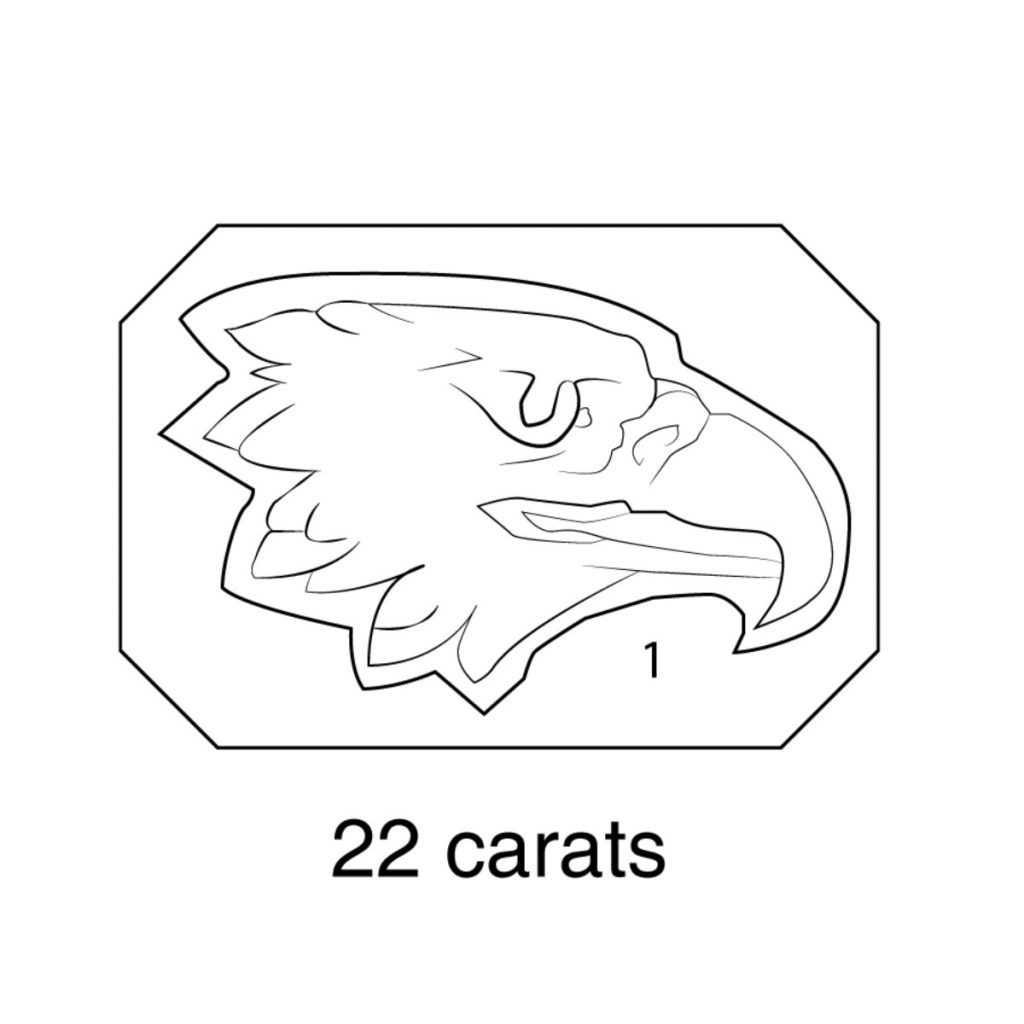
  • Eagle’s Head: The most common hallmark found on gold jewelry in France. It indicates 18-carat gold (750/1000).
Poinçon Coquille Saint-Jacques pour l’or 14 carats - Bracelets Kern
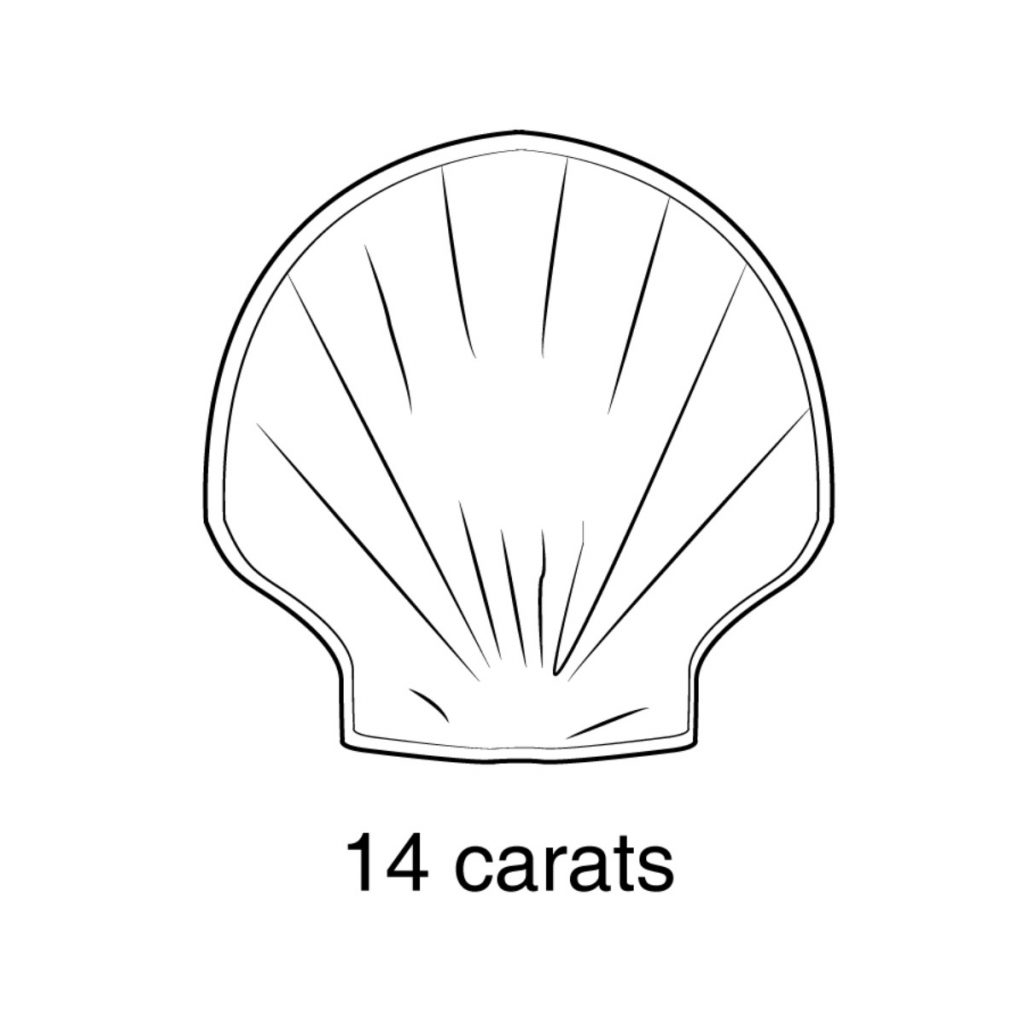
  • Scallop Shell: This hallmark is used for 14-carat gold (585/1000), a more affordable alternative to 18K gold.
Poinçon Trèfle pour l’or 9 carats - Bracelets Kern
  • Clover: Found on 9-carat gold jewelry (375/1000), it is often associated with budget-friendly jewelry.
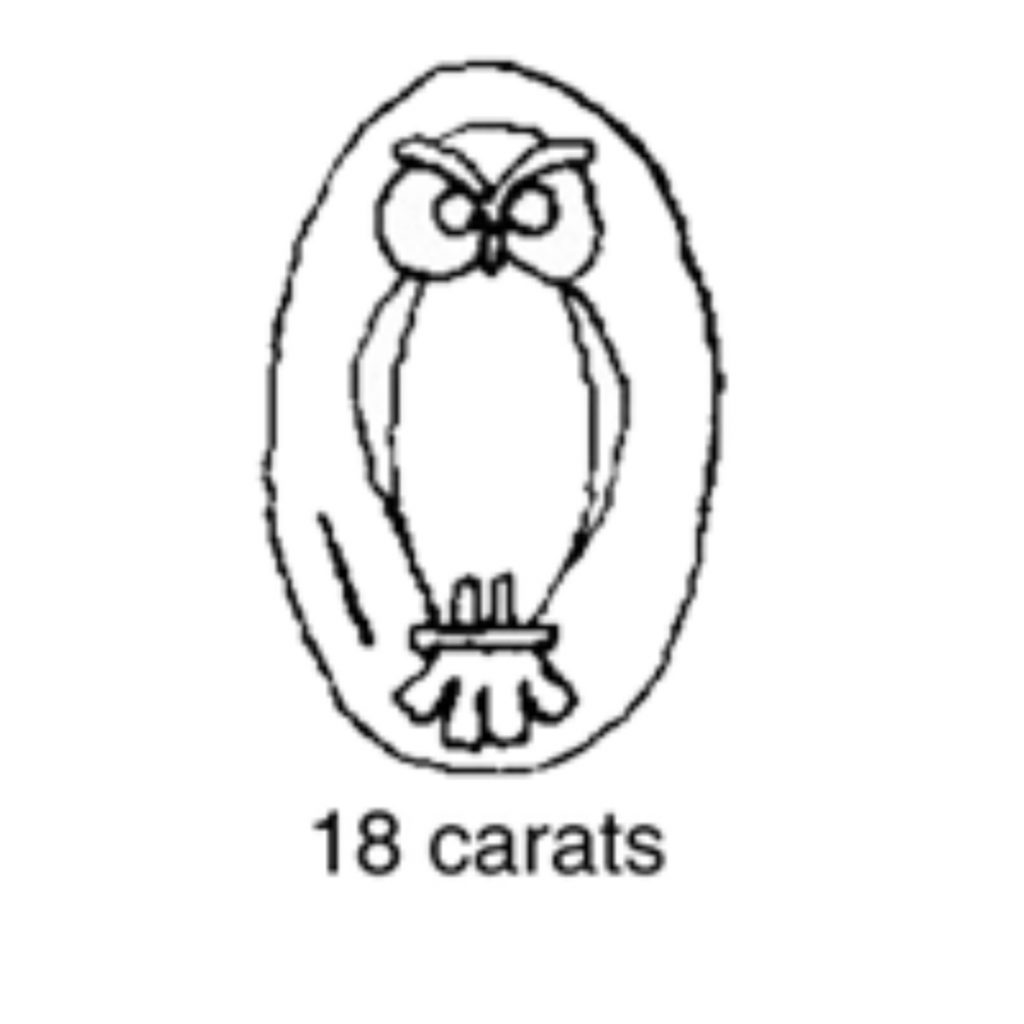
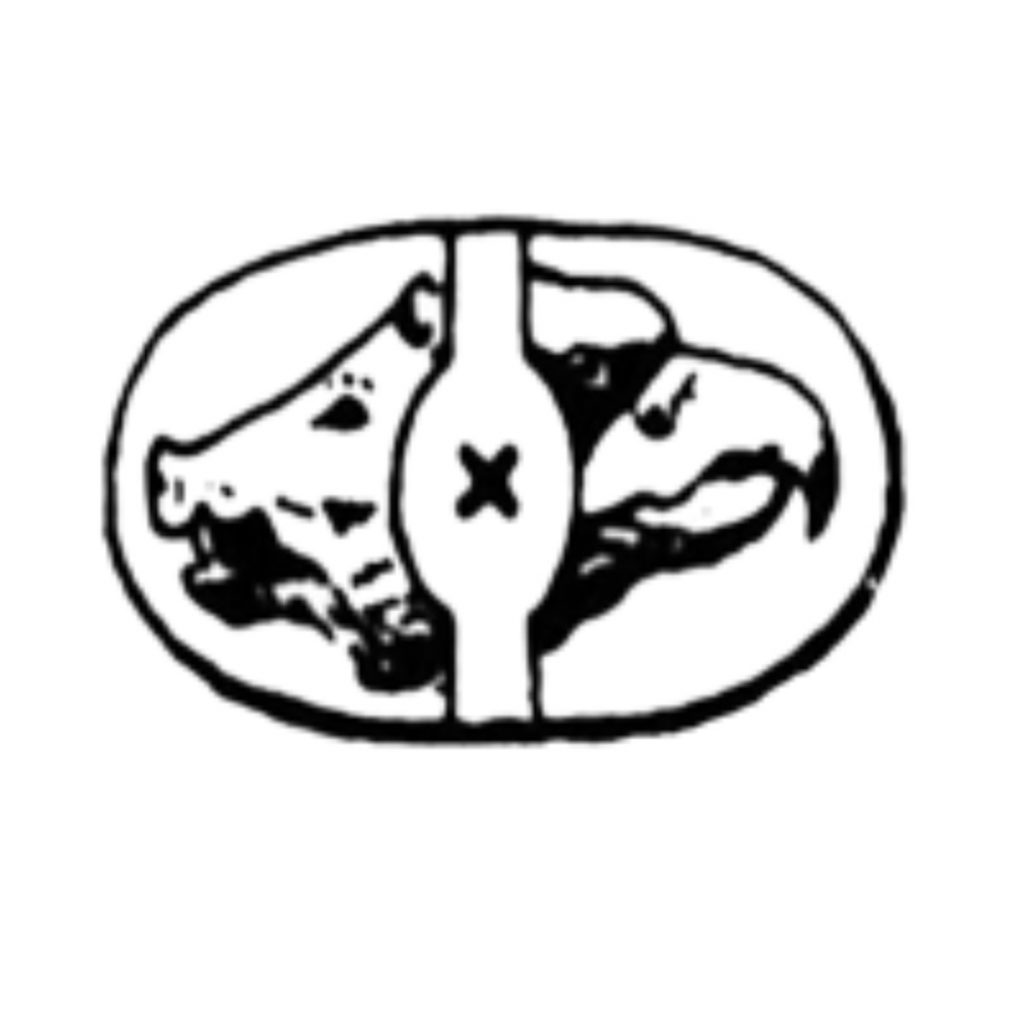
Poinçons Hibou et Tête de Cheval pour l’or 18 carats - Bracelets Kern
  • Owl and Horse’s Head: These hallmarks are stamped on imported jewelry, guaranteeing a gold content of 18 carats (750/1000).
Poinçon Tête de Sanglier pour l’or 12 carats - Bracelets Kern
  • Boar’s Head: This hallmark is used for jewelry that combines gold and silver, indicating 12-carat gold purity (500/1000).
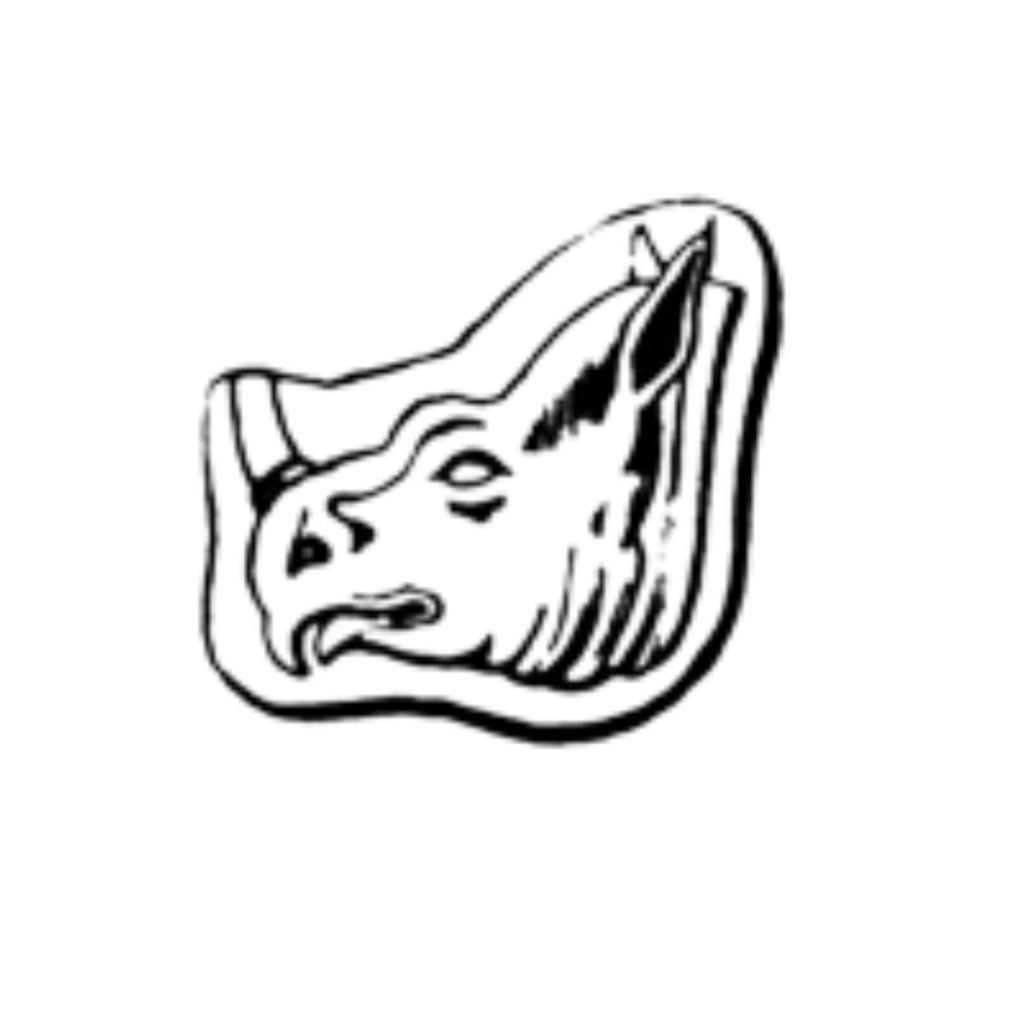
Poinçon Tête de Rhinocéros pour l’or 18 carats - Bracelets Kern
  • Rhinoceros Head: Stamped on solid gold chains of 18 carats (750/1000) and above, ensuring their quality guarantee.

Gold-Plated Hallmarks

The marking “gold-plated” indicates that a piece of jewelry is made of a base metal covered with a thin layer of gold. To differentiate solid gold jewelry from gold-plated jewelry, simply check its hallmark: gold-plated pieces always have a square-shaped hallmark. Some older models also feature inscriptions like “Oria” or “Fix”, signifying higher-quality gilding. However, unlike solid gold, gold plating wears off over time due to friction and oxidation.

International Gold Hallmarks

Each country has its own hallmarking system, which often differs from the one used in France. Here are some examples of international hallmarks:

  • 375: Indicates 9-carat gold.
  • 585: Denotes 14-carat gold.
  • 750: Corresponds to 18-carat gold.
  • 916: Represents 22-carat gold.
  • 999: Marks pure gold.

These numbers are often engraved in a diamond or rectangle shape, depending on the jewelry’s country of origin. Checking these markings is essential to ensure the true gold content of a piece purchased abroad.

Platinum Hallmarks

Platinum, a rare and highly valued precious metal, has its own distinctive hallmarks:

  • Emperor Penguin: Used to certify 999‰ platinum (99.9% purity).
  • Dog’s Head: Indicates 950‰ platinum, one of the most commonly used in jewelry.
  • Mascaron: Represents platinum below 850‰, often alloyed with other metals for enhanced durability.

How to Verify a Hallmark on a Gold Jewelry Piece?

1. Use a Loupe or Microscope

Hallmarks are very small, so use a 10x magnifying glass to examine the markings on your jewelry. Look for shapes like a diamond, rectangle, or an animal’s head.

2. Compare with Official Databases

Official databases and jeweler guides list existing hallmarks. You can compare them with those on your jewelry to confirm their authenticity.

3. Get the Gold Tested by an Expert

If you have doubts about your jewelry’s authenticity, consult a professional jeweler or a precious metals laboratory. Experts use chemical tests or spectrometers to determine the gold content.

Where to Find the Hallmark on a Jewelry Piece?

Hallmarks are usually placed in discreet areas of the jewelry:

  • Bracelets: On the clasp or inside the band.
  • Rings: Inside the band.
  • Necklaces and Chains: On the clasp or a small medallion

When and How Is Jewelry Stamped?

Hallmarking is done at the time of manufacturing or upon importation into France. The process involves striking the metal with a hammer and an official punch, ensuring the jewelry’s authenticity and compliance with legal standards.

Why Are Hallmarks Important?

  • Authenticity Verification: They distinguish solid gold jewelry from counterfeits.
  • Value Estimation: 9K, 14K, 18K, and 24K gold all have different market values.
  • Easier Resale: A recognized hallmark makes jewelry easier to sell.

Gold Bracelets and Their Hallmark

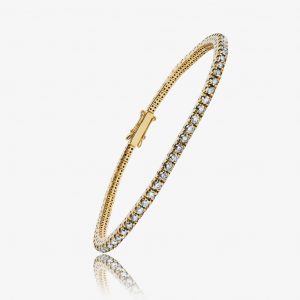
Gold bracelets are stamped with a hallmark guaranteeing their authenticity and purity. This marking, often found on the clasp or inside the bracelet, certifies the jewelry’s quality and compliance with industry standards. It also helps distinguish a solid gold bracelet from gold-plated or alloy models.

At Bracelets Kern, we offer an exclusive collection of 9K gold bracelets, all certified and hallmarked. Available in yellow, white, and rose gold, our designs combine elegance, durability, and refinement. Thanks to their distinctive hallmark, our bracelets ensure traceability and impeccable quality, making them an ideal choice for a personal purchase or a meaningful gift.

FAQ: Everything You Need to Know About Gold Jewelry Hallmarks

  1. How Can I Recognize a Gold Jewelry Piece Without a Hallmark?
    A genuine gold piece should generally have a hallmark, but some older or very small jewelry pieces may not be stamped. To verify authenticity, you can perform an acid test, use a magnet (gold is not magnetic), or consult a jeweler.
  2. How Can You Identify Gold with the Naked Eye?
    Gold has a unique luster, does not tarnish, and does not show signs of oxidation over time. It does not change color or leave green or black marks on the skin. It also has a dense appearance and a softer touch compared to plated metals.
  3. Where Is the Hallmark Usually Located on a Piece of Jewelry?
    The hallmark is often placed in discreet areas of the jewelry, such as the inside of a ring, the clasp of a bracelet or necklace, the back of a pendant, or the post of earrings.
  4. What Is the Difference Between a 750 and 18K Hallmark?
    There is no difference. The 750 hallmark means the jewelry contains 75% pure gold, which is equivalent to 18 carats. This notation is commonly used in Europe.
  5. How Can You Maintain a Gold Piece Without Damaging Its Hallmark?
    It is recommended to clean the jewelry with warm soapy water and a soft toothbrush, then dry it with a soft cloth. Avoid harsh chemicals and excessive rubbing, as they may wear down the hallmark over time.

This should please you:

How to recognize a genuine gold bracelet: A practical guide to avoiding counterfeits

Why Is Gold a Perfect Choice for Your Bracelets?

Different types of bracelet clasps: which one to choose and why?

Care and cleaning: how to preserve the lustre of your gold bracelets

Giving a gold bracelet: gift ideas for every occasion

Leave a Comment

Your email address will not be published. Required fields are marked *

Shopping Cart
Scroll to Top

Use & Maintenance

Your Kern jewel has been designed with great care according to the requirements and rules of the jewelry industry. Each step of the manufacturing process has been carried out with the utmost care, in order to create an exceptional piece. To keep it looking its best, we recommend that you carefully follow our maintenance tips:

Tips for use

When you are not wearing it, it is preferable to store your jewellery in its original case or pouch, thus avoiding rubbing with other jewellery, shocks and scratches.

When wearing your jewelry, be sure to handle it gently to avoid bumps and falls. It is preferable to remove your jewellery when practising sports.

Avoid contact with salt water, sand, cosmetics, perfumes, detergents and any corrosive product that could alter precious metals and gems.

We recommend that you have the condition of your jewellery checked every year. Do not hesitate to make an appointment with our workshops to have the crimps, clasps and their double security checked. During this visit, our jewellers will know how to revive the brilliance of your pieces and give back to the gems all their vivacity.

Maintenance instructions

To intensify the shine of your jewelry, do not hesitate to rub them with a soft and dry cloth. If you wish to clean them, you can immerse them in soapy water (PH neutral soap) to eliminate impurities due to pollution.

Then rinse them with clean water and dry them carefully with a soft cloth.

This procedure does not apply to bracelets set with emeralds, for which we recommend special attention.

Polishing and rhodium-plating operations, which are effective in restoring the shine to your jewellery, cannot be repeated too frequently.

The first polishing and rhodium plating are offered by Kern. The following, which should preferably be carried out in our workshops, are at the customer’s expense.

Quality of the Gems

Laboratory Diamonds

Maison Kern offers exclusively synthetic diamonds, created using advanced technological processes (HPHT or CVD).

  • Optical, chemical, and physical properties identical to those of natural diamonds.
  • Independent certification available upon request.
  • Environmentally friendly production with a reduced carbon footprint.

Laboratory-Created Precious and Semi-Precious Stones

All precious and semi-precious stones offered by Maison Kern come from specialized laboratories.

  • Laboratory sapphires: AAA quality, intense color, excellent transparency, and precise cutting.
  • Laboratory black diamonds: deep and uniform shade obtained through laboratory treatment for optimal brilliance.
  • Laboratory brown and champagne diamonds: warm color and natural sparkle, without chemical treatment.
  • Laboratory emeralds: slight inclusions replicating the look of natural stones while offering enhanced durability.
  • Laboratory tsavorites: intense or soft green, a rare stone reproduced with precision for exceptional clarity.
  • Laboratory blue diamonds: color obtained through the controlled presence of boron, ensuring a stable and uniform hue.

Metal

Maison Kern creations are made exclusively from rhodium-plated 925/1000 sterling silver.

  • Rhodium plating protects silver against oxidation and maintains its lasting shine.
  • The silver comes from suppliers committed to responsible and environmentally respectful practices.

Maison Kern Commitments

  • Complete traceability for each laboratory-created stone.
  • Transparency regarding manufacturing processes.
  • Refined and durable jewelry combining aesthetics, innovation, and fine jewelry craftsmanship.

Shipping & Returns

DELIVERY POLICY

Your Kern jewelry is shipped Monday through Friday, excluding holidays. We do not deliver on weekends.

All Kern articles ordered are insured by us until delivery.

We guarantee you the security of the preparation and the routing of your order.

Your jewels are delivered in their Kern box and pouch

Purchase of a custom made bracelet :

Allow 3 to 4 weeks for the creation of your bracelet.

It will be delivered to you in its magnificent jewel case with its certificate of authenticity.

An email will inform you that your bracelet is ready.

A tracking number will be indicated to follow your order on our website under the heading “
m
my account/
m
my orders
”.

Free delivery in the European Union:

Your order is prepared within 2 working days following the date of the confirmation email that your custom made bracelet is ready.

Free delivery to countries outside the European Union:

Delivery is made within 3 to 5 working days following the date of the the date of the confirmation email that your custom bracelet is ready.

Any possible customs duties or import taxes that you may have to pay upon receipt of your package.

RETURN POLICY

Return of a custom made bracelet :

Write to us to let us know the reasons for your return by e-mail at [email protected]

Log in to your account to make your request and you will receive your pre-paid return slip.

For all shipments made in the European UnionIf you are not satisfied with your order, you can return your items within 15 days of receiving your order and in accordance with the return policy of the House of Kern mentioned above in the title ” Under what conditions can items be returned, exchanged or refunded “.

For all shipments outside the European Union, your items can be returned within 15 days of receipt of your order and according to the conditions of return of the House Kern mentioned just before in the title ” Under what conditions can items be returned, exchanged or refunded “.

À Under what conditions can items be returned, exchanged or refundable?

We accept returns on items that require sizing to fit your wrist.

If the bracelet needs to be enlarged, you will be asked to pay an additional fee according to the new size compared to your initial order.

If the bracelet does not match the order

The articles must be returned in their original packaging including the care instructions, the jewel case, its certificate of authenticity and the invoice with the precise reason.

What items are not refundable?

Privilege offers

Items returned worn, incomplete (care instructions, case, certificate of authenticity…), damaged or spoiled.

Size Guide

FIND YOUR KERN BRACELET SIZE BY PRINTING OUR WRIST MEASURING TAPE

You can download and print our measuring tape on an A4 sheet.
Follow the instructions below to place the tape measure on your wrist and know your own size and write it down.

Indications:

Measure your wrist, adjusting the tape measure just above your wrist bone or where you like to wear your bracelet.
Choose the size according to the way you want to wear your bracelet.
Note the measurement by adding :

Half a centimetre (+0.50 cm) for a bracelet worn closer to your skin.
One centimeter (+1 cm) for a bracelet worn more loosely.

For example :

A wrist of 15 cm, choose 15.50 cm or 16 cm depending on how you want to wear your bracelet.

WRIST CIRCUMFERENCE (CM)

SIZE OF THE BRACELETS (CM)

13,50 – 14,00

14 – 14,50

14,50 – 15,00

15 – 15,50

15,50 – 16,00

16 – 16,50

16,50 – 17,00

17 – 17,50

17,50 – 18,00

18 – 18,50

18,50 – 19,00

19 – 19,50